
13 October 2025
Updated 31 October 2026
Straight neck and cervical lordosis: what they are, symptoms and treatment
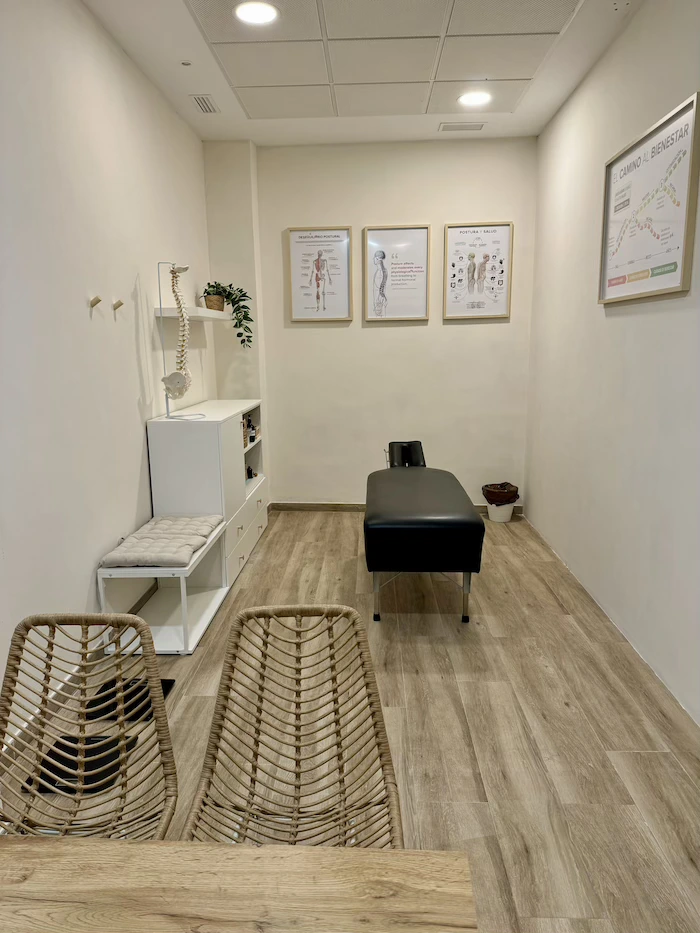
Cervical lordosis is the natural, gentle C-shaped curve of the neck. When that curve is partly or fully lost and the vertebrae line up straighter, it is called a straightened neck (in Spain, rectificación cervical). It is a very common X-ray finding and, while it can go with neck pain and stiffness, it isn't always the cause: many people with a straight neck have no symptoms at all.
What cervical lordosis is
The seven vertebrae of the neck form a curve that helps spread the weight of your head (about 5 kg) and absorb impact. That curve can be:
- Normal, with its C shape.
- Reduced or straightened, when the neck looks straighter than usual.
- Increased (hyperlordosis), when the curve is more pronounced.
Why the neck straightens
It usually develops gradually from holding your head forward for long periods, especially looking at a phone or computer. It can also follow whiplash or come with age-related wear. Sometimes the neck simply looks straight on an X-ray because the muscles were tense or the chin was tucked when the image was taken.
Common symptoms
When a straightened neck does cause symptoms, the most common are:
- Neck stiffness and tiredness at the end of the day.
- Pain spreading to the shoulders and upper back.
- Headaches that start at the base of the skull (see our guide to headaches from the neck).
- Fatigue when holding your head up for a long time.
Does the curve explain the pain?
Not always. Studies comparing neck shape with neck pain have found no clear link: people with straight necks and no pain, and people with pain and a normal curve, are both very common (Grob et al., European Spine Journal, 2007). So we don't treat the X-ray; we treat you: how your neck moves, what hurts and what makes it worse.
How we treat it
At the clinic we assess how each part of your neck and upper back moves, your working posture and your history. Treatment combines:
- Gentle adjustments and mobilisation to restore movement to the stiffest areas.
- Strengthening exercises for the deep neck muscles and upper back, which hold your head up all day.
- Posture advice: screen height, how you use your phone, and a break every hour.
The goal is less pain and a neck that moves better. Whether the curve changes on a follow-up X-ray is secondary, and we won't ask you for repeat X-rays to check.
When to see a doctor first
See your doctor if you have tingling or weakness in your arms, dizziness with double vision or trouble speaking, pain after a hard knock or accident, or pain that keeps you awake and doesn't change with position.
Frequently asked questions
Is cervical lordosis the same as a straightened neck? No. Lordosis is the name of the neck's normal curve. A straightened neck is when that curve is lost.
Can a straightened neck be reversed? The curve may improve a little, but what matters is pain and movement, which usually improve within a few weeks of treatment and exercise.
How soon will I notice a difference? Many people feel less tension within the first few sessions. Making it last with exercises takes several weeks.
Can I exercise with a straightened neck? Yes, and it's a good idea. Focus on strengthening your neck and upper back, and at first avoid positions that hold your neck bent forwards or backwards for a long time.
What can I do at home? Raise your screen to eye level, bring your phone up to your face instead of dropping your head, take a break every hour, and use a pillow that keeps your neck in line.
Chiropractor · graduate of the Barcelona College of Chiropractic (2021) · consults in English, Spanish and French