
3 November 2025
Updated 31 October 2026
Is it bad when your joints crack, or to crack your knuckles?
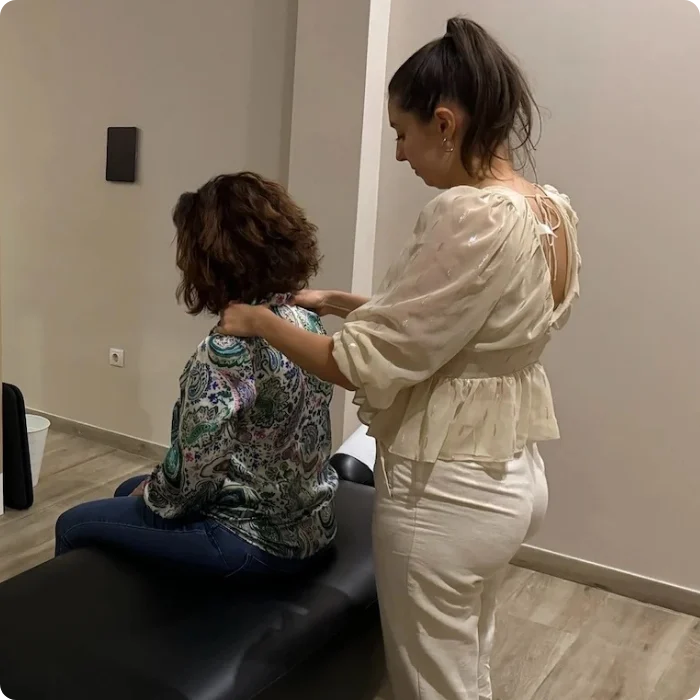
In most cases, it isn't bad. Knees, neck or fingers that crack are very common and, without pain, swelling or locking, don't point to any problem. Cracking your knuckles doesn't cause arthritis either. What does deserve attention is a crack that comes with pain or appears after an injury.
Why joints crack
The sound is called crepitus and can come from several things:
- Gas bubbles in the joint fluid. When the surfaces of a joint are pulled apart, the pressure inside the capsule drops and a gas bubble forms. That's the knuckle crack, and also the sound you may hear during a chiropractic adjustment. It's why the same joint takes about 20 minutes before it can crack again.
- Tendons or ligaments sliding over a bony ridge as you move, as in the shoulder or hip.
- Small irregularities in the joint surface, more common with age.
Does cracking your knuckles cause arthritis?
No. It's one of the most widespread myths, and studies have found no link between habitual knuckle cracking and arthritis of the hands (deWeber et al., Journal of the American Board of Family Medicine, 2011). The best-known example is a doctor who cracked the knuckles of one hand only for about 60 years and found no arthritis in either (Unger, Arthritis & Rheumatism, 1998).
One older study did find slightly lower grip strength and some hand swelling in very frequent crackers (Castellanos and Axelrod, Annals of the Rheumatic Diseases, 1990), so doing it often and forcefully gains you nothing. But it isn't a dangerous habit.
When a crack does need attention
See a professional if the crack comes with:
- Pain when you move or afterwards.
- Swelling or warmth in the joint.
- A locking feeling, or the joint feeling like it "gives way".
- Loss of movement.
- A recent knock or injury.
In the knee, cracking with pain when squatting or climbing stairs can point to irritation behind the kneecap; in the neck or back, cracking with pain and stiffness usually goes with an area that isn't moving well.
How to look after your joints
- Move every day. Joints are nourished by movement.
- Strengthen the muscles around them, especially for knees and hips.
- Avoid spending hours in one position, which is what creates the stiff feeling that "needs" a crack.
If you often feel the urge to crack your back or neck, we cover that in is it good to crack your back?.
Frequently asked questions
Is it normal for my knees to crack when I squat? Yes, it's very common. If it doesn't hurt, there's nothing to worry about.
Does crepitus mean wear and tear? Not necessarily. It happens in healthy joints, though in some people it goes with osteoarthritis, especially if there's pain.
Can cracking my knuckles deform my hands? There's no evidence that it does.
Does exercise make the cracking worse? No. Staying active improves joint health in the long run, unless an injury means adapting what you do.
Can I make my joints stop cracking? Not always, and it isn't necessary, especially if there's no pain.
Chiropractor · graduate of the Barcelona College of Chiropractic (2021) · consults in English, Spanish and French