
2 November 2025
Updated 1 November 2026
Is it good to crack your back? Why it pops and when not to
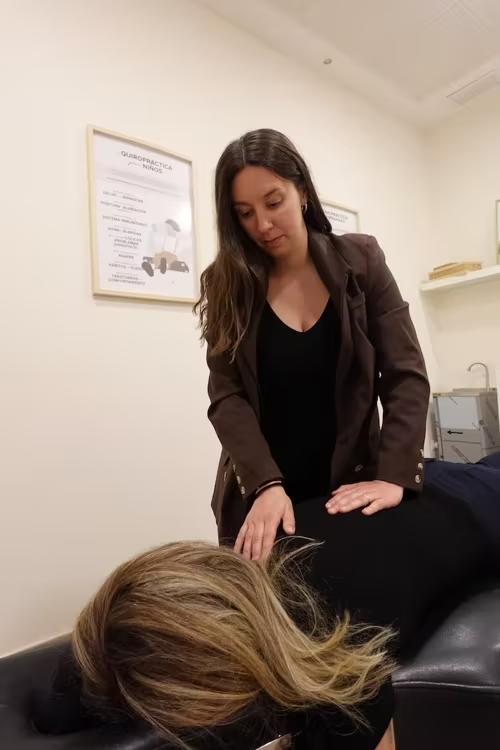
Cracking your back now and then isn't bad: the pop is gas released inside the joint, and it doesn't damage bone or cause arthritis. What's worth watching isn't the noise but the urge: if you feel you need to crack your back several times a day to feel right, or the relief lasts less and less, your back is telling you something is stiff or overloaded.
Why does my back crack?
The sound is called cavitation. The small joints of the spine are surrounded by a capsule of synovial fluid. When you stretch or twist your back, the joint surfaces pull apart, the pressure inside the capsule drops suddenly and a gas bubble forms: that's the "crack". A study using real-time MRI of knuckle joints captured that cavity forming at the exact moment of the pop (Kawchuk et al., PLoS One, 2015), and the mechanism in the spine is thought to be the same.
That's why, after cracking, the same joint needs about 20 minutes before it can pop again.
Why it cracks when you stretch
When you stretch in the morning or after hours of sitting, you suddenly move joints that have been still, and it's easy for one to cavitate. If it cracks without pain, that's normal. A tendon or ligament can also make a sound as it slides over a bony ridge, especially at the shoulders and hips.
Is cracking your back good or bad?
- Occasionally: there's no evidence it does harm. The relief is real, because movement stimulates receptors in the joint and relaxes the muscles for a while.
- Many times a day: there's no proof it damages the joint either, but it's usually a symptom: your back is stiff or loaded and you're chasing relief that doesn't last.
- Forcefully, or with someone else's help: this is riskier. Someone "cracking" you by yanking your neck, or walking on your back without knowing what they're doing, can strain muscles or, in the neck, cause more serious problems.
When you crack your own back, the joint that moves is usually the one that already has the most give, not necessarily the stiff one. That's why the relief is short-lived.
Does cracking your back cause arthritis?
No. No study has linked joint cracking to arthritis. The best-known example is the knuckles: a doctor cracked the knuckles of one hand only for about 60 years and found no arthritis in either (Unger, Arthritis & Rheumatism, 1998). More in is it bad when your joints crack?.
What to do if you often need to crack it
Rather than chasing the pop, work on the cause:
- Move more through the day: get up every 30-45 minutes.
- Gentle spinal mobility: cat-camel on all fours, seated rotations with arms crossed, extensions leaning back over a chair.
- Strengthen your back and trunk: band rows, planks, glute bridges.
- Check your workstation: screen at eye level, lumbar support, feet on the floor.
How it differs from a chiropractic adjustment
An adjustment can make the same "crack", but that isn't the aim. An adjustment targets the specific joint that the examination shows is stiff, with a controlled, quick, small-amplitude movement, as part of treatment that includes exercises and changes to your day. The noise is a side effect, not proof that it worked.
When to get it checked
Have it assessed if the cracking comes with:
- Pain when you move or afterwards.
- Swelling, locking or a feeling that your back "gives way".
- Tingling or weakness in your arms or legs.
- Pain after a knock or fall.
- Stiffness that doesn't improve over weeks, or needing to crack it several times a day.
And see a doctor for night pain that nothing changes, fever or unexplained weight loss.
Frequently asked questions
Why does my back crack when I twist? Rotating pulls the surfaces of the spinal joints apart and releases the gas. Without pain, it's normal.
Is it bad to crack your neck? Doing it gently doesn't usually cause problems, but avoid sudden, forced twists and don't let someone else crack it by pulling your head.
Why does cracking feel so good? Movement stimulates receptors in the joint and relaxes the surrounding muscles for a while.
Can I hurt myself cracking my back? If you do it gently, the risk is low. Forcing positions or bouncing can strain a muscle.
Why does my lower back crack? Same mechanism. If it comes with pain, see our page on low back pain.
Read more
Chiropractor · graduate of the Barcelona College of Chiropractic (2021) · consults in English, Spanish and French