
9 November 2025
Updated 1 November 2026
What does a chiropractor do? What happens in a session
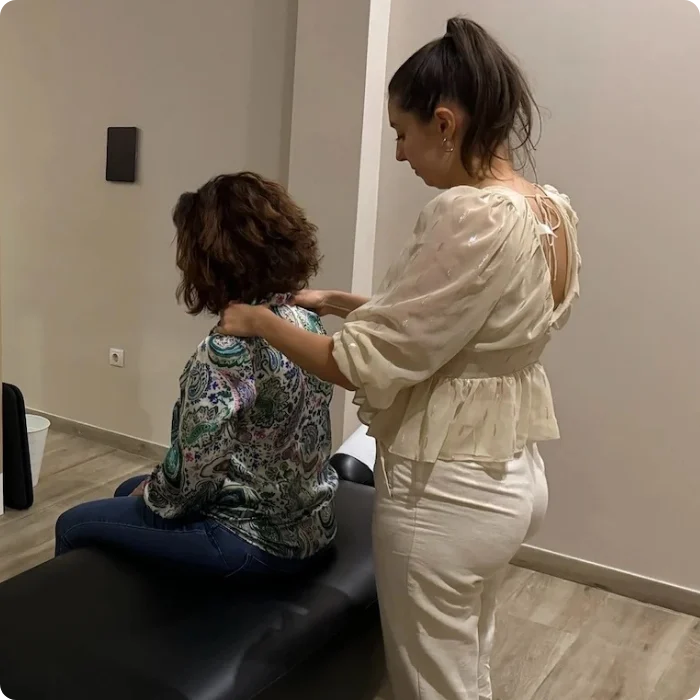
A chiropractor assesses and treats problems of the musculoskeletal system, especially the spine: back pain, neck pain, some headaches and joint aches. Their best-known tool is the adjustment, a quick, precise hand movement on a stiff joint, but a good session also includes examination, other hands-on techniques, exercises and advice for your daily life.
What happens at the first visit
- Case history: what's wrong, since when, what makes it worse or better, your medical history and medication.
- Screening for warning signs: questions and tests to rule out anything that shouldn't be treated by hand and needs a doctor.
- Examination: posture, movement of the spine and joints, palpation, strength, sensation and reflexes.
- Explanation: what we think is going on, what treatment can and can't do, and how long we expect it to take.
- First treatment, if everything fits.
At our clinic, the first visit lasts about an hour. We go through it in detail in your first chiropractic visit: what to expect.
What happens at a follow-up session
Between 15 and 20 minutes: we review how you've been, re-examine the treated areas, adjust where needed, go over your exercises and progress them. If there's no improvement after a few sessions, the approach is rethought or you're referred.
Techniques chiropractors use
- Adjustment or spinal manipulation: a quick, small-amplitude thrust on a specific joint. Sometimes there's a "crack", which is gas released in the joint, not a bone "going back into place".
- Mobilisation: slower, gentler movements without a thrust. Used when an adjustment isn't appropriate or you'd rather not have one.
- Soft tissue work: pressure on trigger points, myofascial release, assisted stretching.
- Therapeutic exercise: mobility and strength work for home, which is what keeps the results.
- Advice: workstation, sleep, physical activity.
What chiropractors treat
Where the evidence is strongest:
- Low back pain, acute and chronic.
- Neck pain.
- Cervicogenic headache (the kind that starts at the back of the neck) and some tension headaches.
Other common reasons people come in: sciatica, pain between the shoulder blades, shoulder, hip or knee aches related to how you move, and back pain in pregnancy.
What they don't treat
- Conditions outside the musculoskeletal system: digestive, respiratory, blood pressure, immune.
- Fractures, infections or tumours.
- Neurological or vascular emergencies.
A good chiropractor tells you this plainly and refers you when something doesn't fit.
Benefits you can expect
- Less pain and more movement, usually within the first few weeks.
- Getting back to what you do: working, sleeping, training with less discomfort.
- A home plan that reduces relapses.
What you shouldn't expect: to have your spine "put back" for good, or to cure illnesses. We go through the evidence in chiropractic pros and cons.
Chiropractor, physiotherapist or osteopath
All three treat musculoskeletal pain with their hands and exercise, and for back pain the results are similar. Chiropractors focus more on the spine and the adjustment; physiotherapists on exercise and rehabilitation of the whole body, and physiotherapy is a regulated health profession in Spain; osteopaths use a wider mix of manual techniques. We compare them in chiropractor or physiotherapist? and chiropractors vs osteopaths.
Training
In Spain chiropractic isn't a regulated health profession. A fully trained chiropractor holds a five- or six-year university chiropractic degree obtained outside Spain, and is usually a member of the Spanish Chiropractic Association (AEQ). More in how to choose a chiropractor in Spain.
Frequently asked questions
Does an adjustment hurt? It shouldn't. There may be brief pressure and some stiffness the next day, especially after the first sessions.
How long is a session? At our clinic, the first is about an hour and follow-ups are 15-20 minutes.
Do I need X-rays? Only if the examination or your history call for them. They aren't requested routinely.
How many sessions will I need? It depends on the problem. Many people notice a change within 3-6 sessions. See how many chiropractic sessions do I need?.
Do I need a referral from my doctor? No, you can book directly. If the assessment shows something that needs your doctor, we refer you.
Read more

Chiropractor · graduate of the Barcelona College of Chiropractic (2021) · consults in English, Spanish and French