
12 October 2025
Cervical migraine: what it is and how to relieve it
 Léa Guido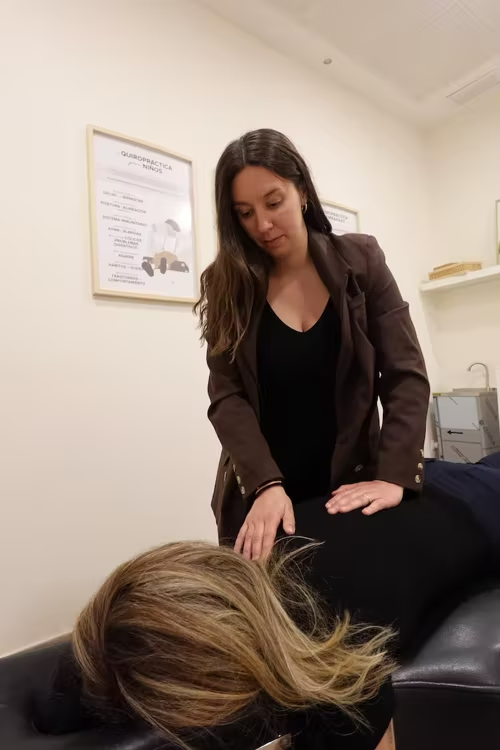
What is a cervical migraine?
What many people call a "cervical migraine" is, more precisely, a cervicogenic headache: pain that originates in the structures of the neck (joints, muscles, and nerves) and is felt in the head. It isn't the same as a classic migraine, although the symptoms can overlap and cause confusion.
Why the neck can trigger head pain
The upper cervical vertebrae share nerve connections with structures in the head. When there's muscle tension, joint restrictions, or sustained poor posture (for example, hunched over a computer or phone), those structures can become irritated and produce pain felt at the base of the skull, the temple, or behind the eye.
Typical symptoms
This usually shows up as one-sided pain that starts in the neck and travels up into the head, often together with neck stiffness, tenderness when pressing the base of the skull, and discomfort that worsens with certain movements or sustained postures.
How chiropractic care helps relieve it
Chiropractic care focuses on improving the mobility of the upper cervical vertebrae and reducing the associated muscle tension through gentle, specific adjustments. Combined with mobility exercises and postural guidance, many patients notice a reduction in how often and how intensely these episodes occur.
Frequently asked questions
Is this the same as a classic migraine? No. A classic migraine has a different neurological origin, while a cervicogenic headache originates in the neck, though both can occur in the same person.
How do I know if my headache is coming from my neck? If the pain starts in the neck, is one-sided, and worsens with certain neck movements or postures, it likely has a cervical component.
Can chiropractic care get rid of these headaches completely? Many people see significant improvement, though results vary depending on the underlying cause and how long it's been present.
What can I do to help prevent them? Paying attention to posture in front of screens, taking frequent breaks, and keeping good neck mobility with gentle exercises all help reduce how often they occur.
When should I see a professional? If the headache is severe, sudden, comes with other neurological symptoms, or doesn't improve with rest, see your doctor for a full evaluation.