
19 November 2025
Updated 1 November 2026
Sciatica in pregnancy: symptoms, timing and relief
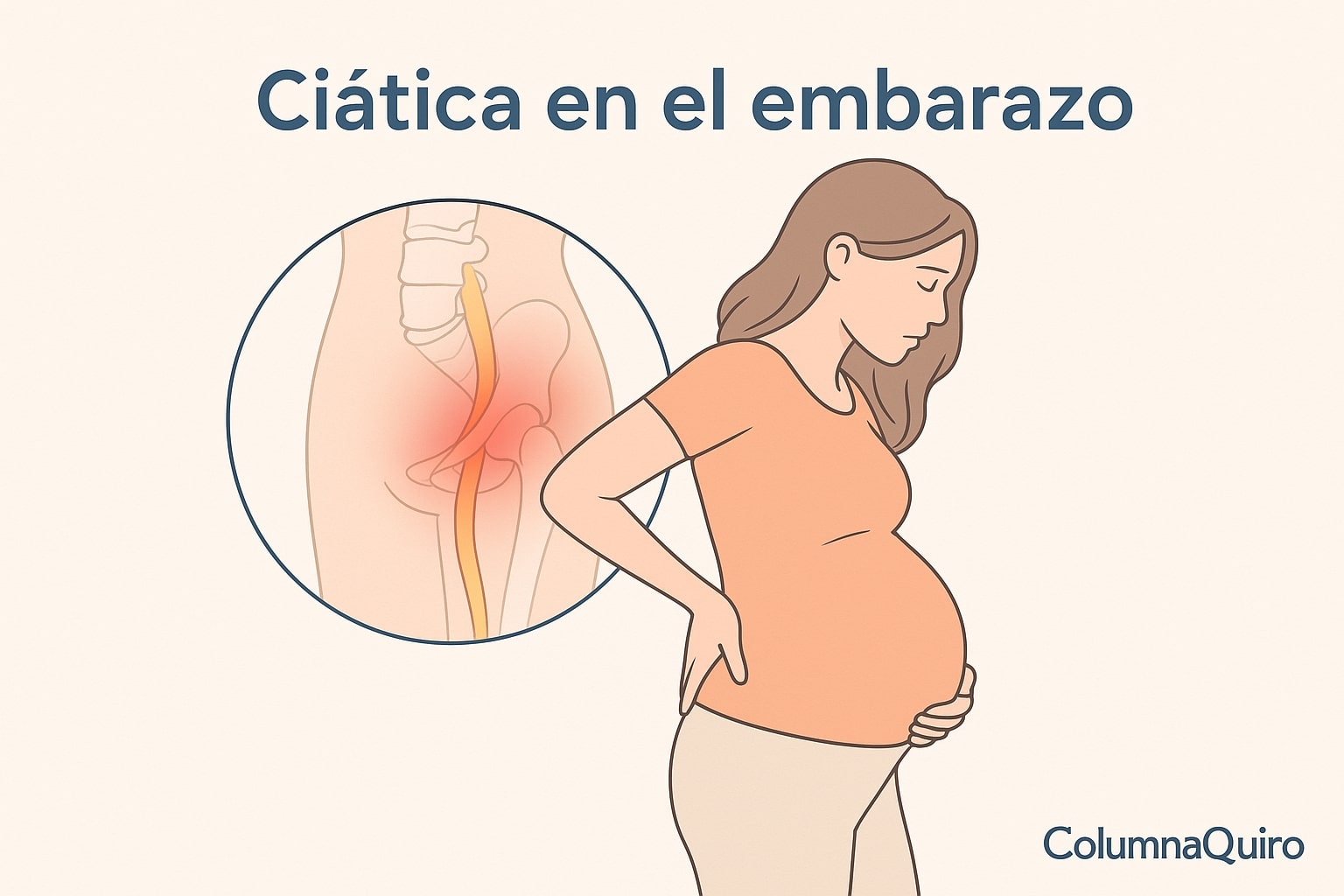
Pain that runs down the buttock and leg during pregnancy is very common, and usually starts from the second trimester. What's often called "sciatica" is actually pelvic or lower back pain spreading to the buttock and thigh; true sciatica, from a disc pressing on the nerve, is much less common. Either way it doesn't affect your baby, walking usually helps and most women improve after birth.
Sciatica or pelvic pain?
Telling them apart helps treat them better:
- Pelvic girdle pain: at the back of the pelvis (one or both sides of the sacrum), in the buttock or at the pubic bone. Worse turning over in bed, climbing stairs, standing on one leg or parting your legs to get out of the car. It affects around one in five pregnant women (Wu et al., European Spine Journal, 2004).
- True sciatica: pain down the back of the leg below the knee, sometimes to the foot, with tingling, numbness or weakness. Less common.
- Low back pain: in the lower back, which can spread to the buttock.
Why it happens in pregnancy
- Hormones such as relaxin, which loosen the ligaments of the pelvis.
- A shifting centre of gravity: the bump pulls forwards and the lower back arches more.
- Weight gain and less time to move.
- The baby and uterus can press on structures in the pelvis in the third trimester.
In which week does it start?
It's most common from week 20-24 and tends to build in the third trimester, when the weight and postural change are greatest. It can start earlier if you had back or pelvic pain in a previous pregnancy.
Is walking good for sciatica in pregnancy?
Yes, in most cases. Walking every day keeps your spine and pelvis moving. A few tips:
- Short steps and comfortable, stable shoes.
- Shorter, more frequent walks if a long one leaves you sore.
- If it's pelvic pain and walking makes it worse, cut the distance and try water (walking in the pool or swimming).
A Cochrane review found that adapted exercise during pregnancy may reduce low back pain and sick leave for it, although the quality of evidence is low (Liddle and Pennick, Cochrane Database of Systematic Reviews, 2015).
How to ease it at home
- Sleep on your side with a pillow between your knees and, if you like, another under your bump.
- Turn over in bed with your knees together, and get out of the car swinging both legs out at once.
- Gentle heat (not too hot) on the lower back or buttock, 15-20 minutes. Avoid strong heat on your bump.
- Gentle stretches: cat-camel on all fours, child's pose with knees apart, and a seated buttock stretch crossing one leg over the other.
- Avoid carrying loads on one side, standing still for long periods and lopsided postures (leaning on one leg).
- A pelvic support belt can help with pelvic pain.
How we treat it at the clinic
We treat pregnant women with techniques adapted to each trimester, in comfortable positions (on your side or supported with cushions), using gentle mobilisation and adjustments of the pelvis and lower back with no pressure on the abdomen. We combine this with exercises and advice for daily life and for labour. We work alongside your midwife or obstetrician, and if anything doesn't fit, we refer you. More in chiropractic for pregnant women.
When to call your midwife or doctor
Call straight away if the pain comes with:
- Bleeding, leaking fluid or regular contractions.
- Fever, chills or pain when passing urine.
- Pain and swelling in one calf (possible thrombosis).
- Loss of bladder or bowel control, or numbness around the genitals.
- Weakness that's getting worse in one leg.
- Sudden, very severe pain, or pain that nothing changes.
Frequently asked questions
Does sciatica in pregnancy affect the baby? No. It's a problem of the mother's spine and pelvis and doesn't affect the baby's development.
Does it go away after birth? In most cases it improves over the following weeks. If it's still there after three months, it's worth having it assessed.
Can I take something for the pain? Always ask your doctor or midwife: some anti-inflammatories aren't recommended in pregnancy.
Is it safe to see a chiropractor while pregnant? With adapted techniques, no pressure on the bump and proper screening first, yes. If yours is a high-risk pregnancy, check with your obstetrician first.
Can it affect labour? It doesn't usually prevent a vaginal birth. Talk to your midwife about comfortable positions during labour.
Read more
Chiropractor · graduate of the Barcelona College of Chiropractic (2021) · consults in English, Spanish and French